1. There is a trail that leads into the interior of the Itaimbezinho Canyon.
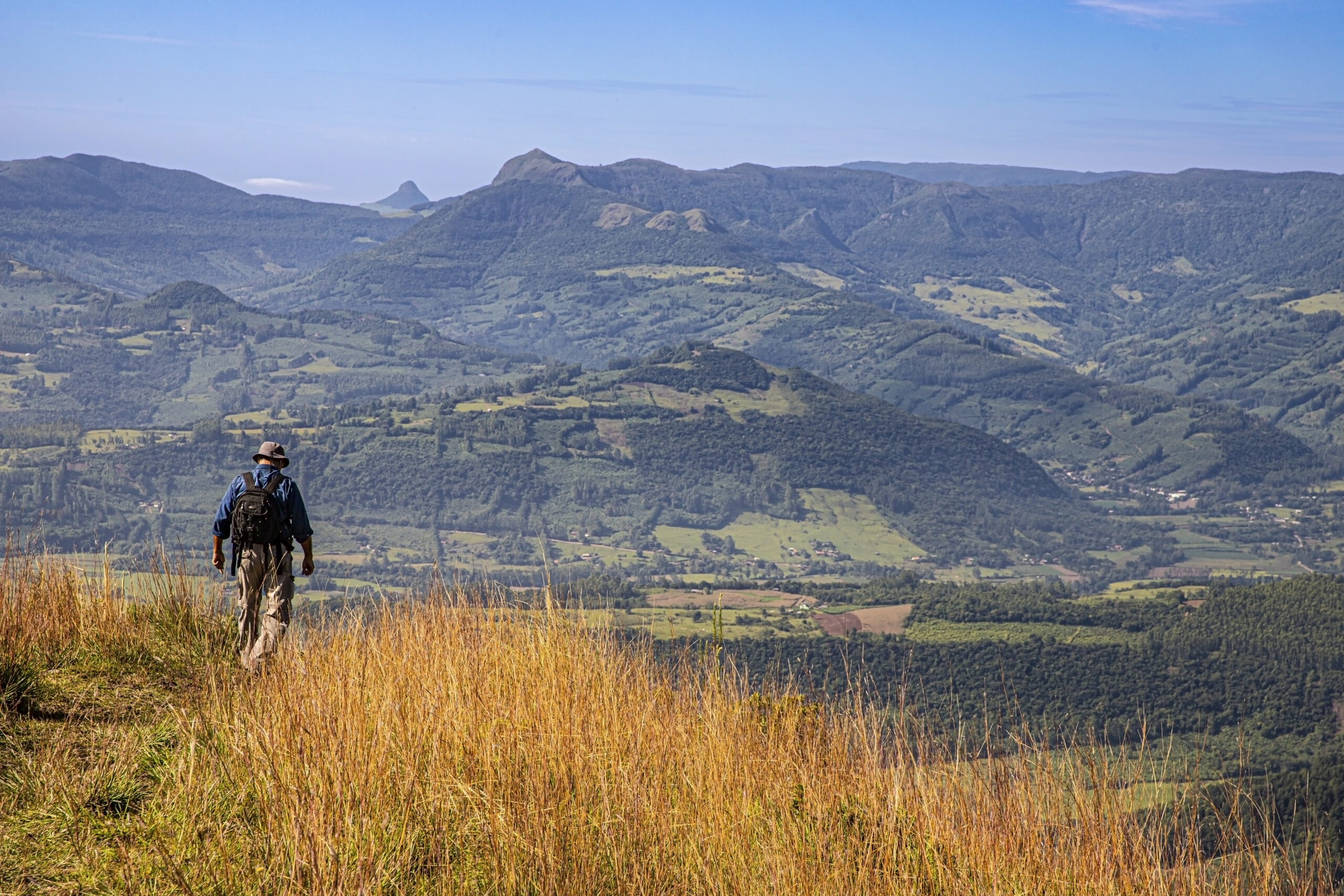
The most well-known image of canyons is usually the one seen from above, with large walls cutting across the horizon. In Praia Grande, there is a completely different way to perceive their dimensions.
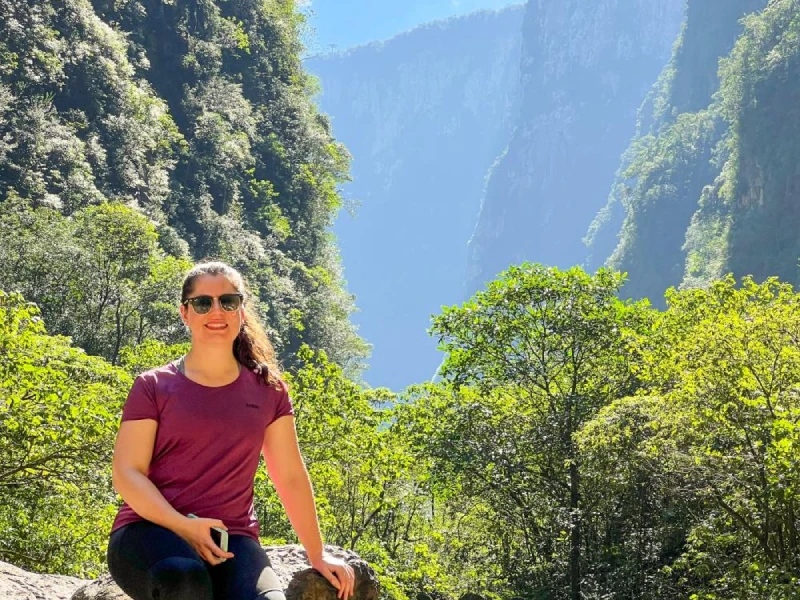
The Rio do Boi trail takes place in the lower part of the Itaimbezinho Canyon, within the Aparados da Serra National Park. The route follows the riverbed and passes between the cliffs, with water crossings and stretches of Atlantic Forest.
The perspective is reversed. Instead of reaching the edge and looking down, the visitor is inside the formation, looking up.
Access is via the Santa Catarina side, starting from Praia Grande, and the activity requires the accompaniment of a certified guide. It is a physically demanding experience and quite different from the hikes done in the upper part of Itaimbezinho.
2. There is an Atlantic Forest park where capuchin monkeys live among the trees.
Along the BR-101 highway in Maracajá, an area of 112 hectares preserves a remnant of the Atlantic Forest.
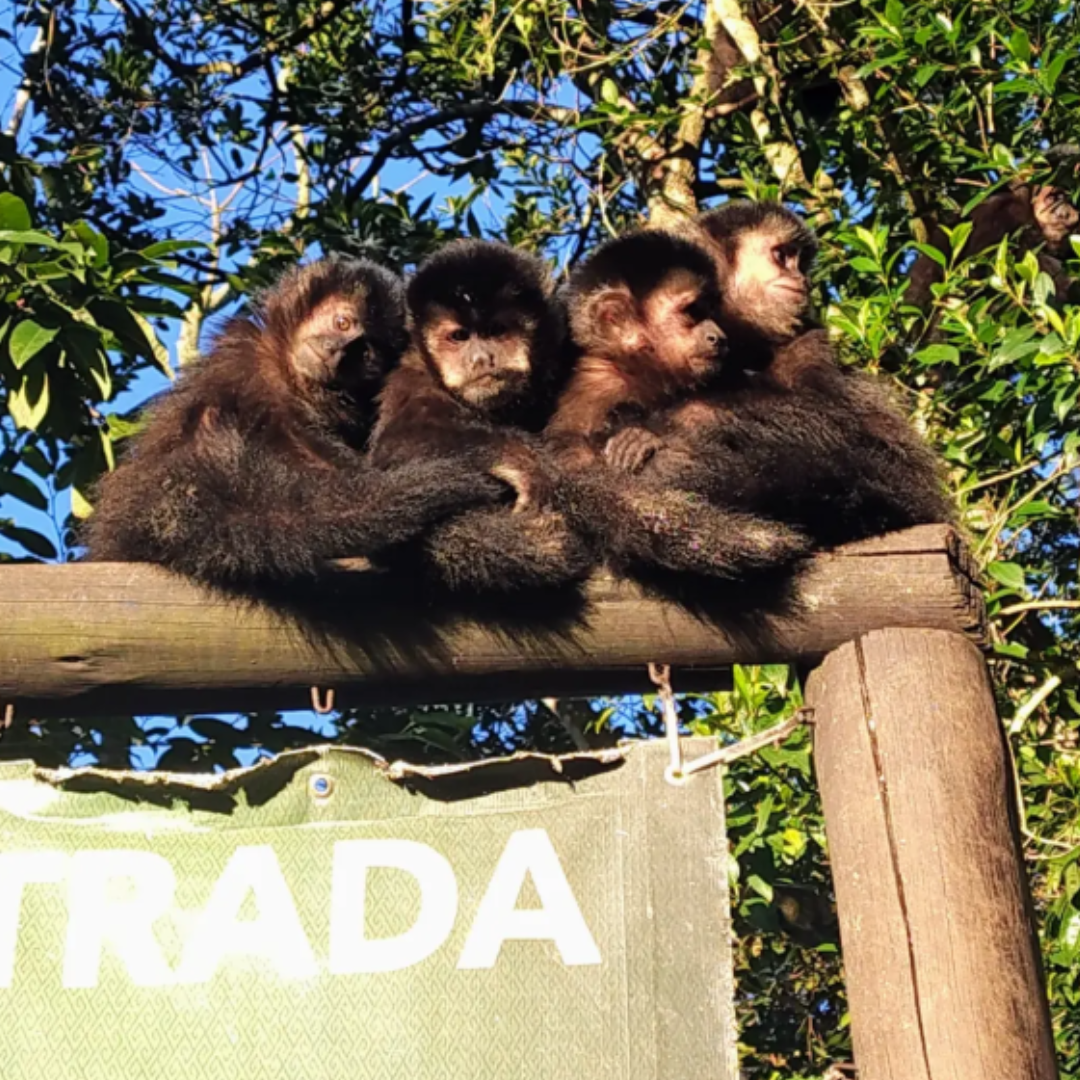
The Maracajá Ecological Park is home to native fauna, and capuchin monkeys are among its best-known inhabitants. Some of the animals live freely in the forest, while the park also keeps species in enclosures intended for environmental education work.
The proximity to one of the main highways in the South makes the contrast even more curious: just a few kilometers can separate the intense traffic of the road from fig trees, dense forest, birds, and primates.
It's a small snapshot of the biodiversity that still survives in southern Santa Catarina.
3. There is a city where the Italian heritage is still present in the streets and at the table.
The name itself gives away a clue: Nova Veneza (New Venice).
The city's colonization began in the late 19th century with the arrival of Italian families, and this origin remains visible far beyond the municipality's name.
Historic mansions, customs preserved by descendants, typical cuisine, and festivals maintain this connection with Italy. Nova Veneza is recognized as the National Capital of Typical Italian Gastronomy and boasts restaurants where pasta, polenta, chicken, wines, and other recipes are part of the local identity.
There is also a curiosity that often surprises those who arrive in the city center: an authentic Venetian gondola, donated by the government of Veneto.
Every year, the Festival of Typical Italian Gastronomy reinforces this connection with music, dance, cuisine, and the traditional Carnevale di Venezia.
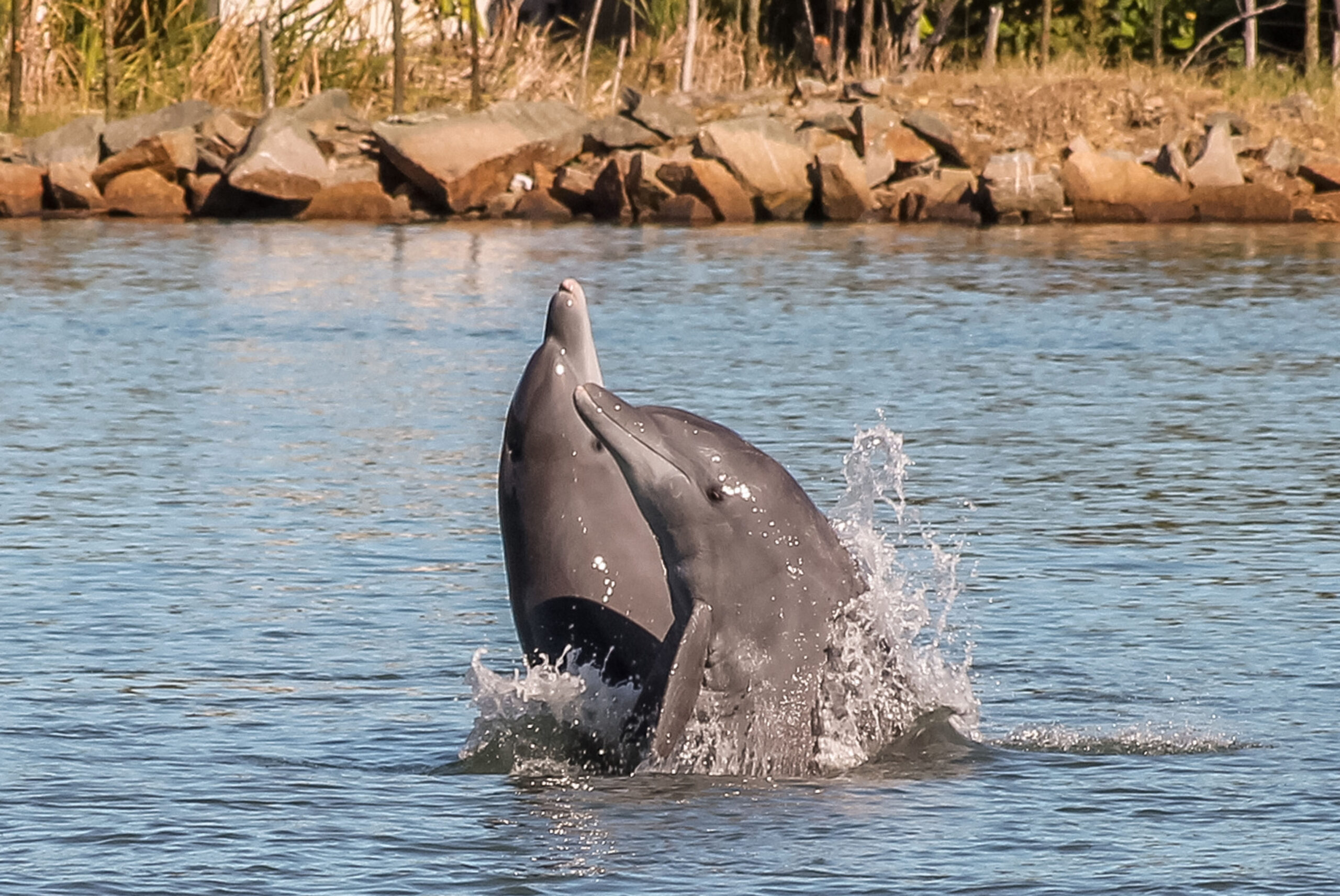
4. Along the same coastline, there are dolphins that fish with humans and whales that come close to the shore.
Laguna holds one of the most unique relationships between wildlife and fishing communities in Brazil.
In Barra de Laguna, bottlenose dolphins participate in a cooperative fishing effort with artisanal fishermen. The animals help guide schools of fish, mainly mullet, towards the shore and give signals that are recognized by the fishermen as the right time to cast their nets.
Dolphins and humans end up benefiting from the same fishing.
And that's not the only impressive presence on the southern coast.
During the breeding season, southern right whales arrive in the waters of Santa Catarina to mate, give birth, and care for their calves. Laguna, Imbituba, and Garopaba are part of the Southern Right Whale Route , and at certain times of the year the animals can be observed from the coast.
In the same region, two completely different relationships between humans and large marine mammals occur just a few kilometers apart.
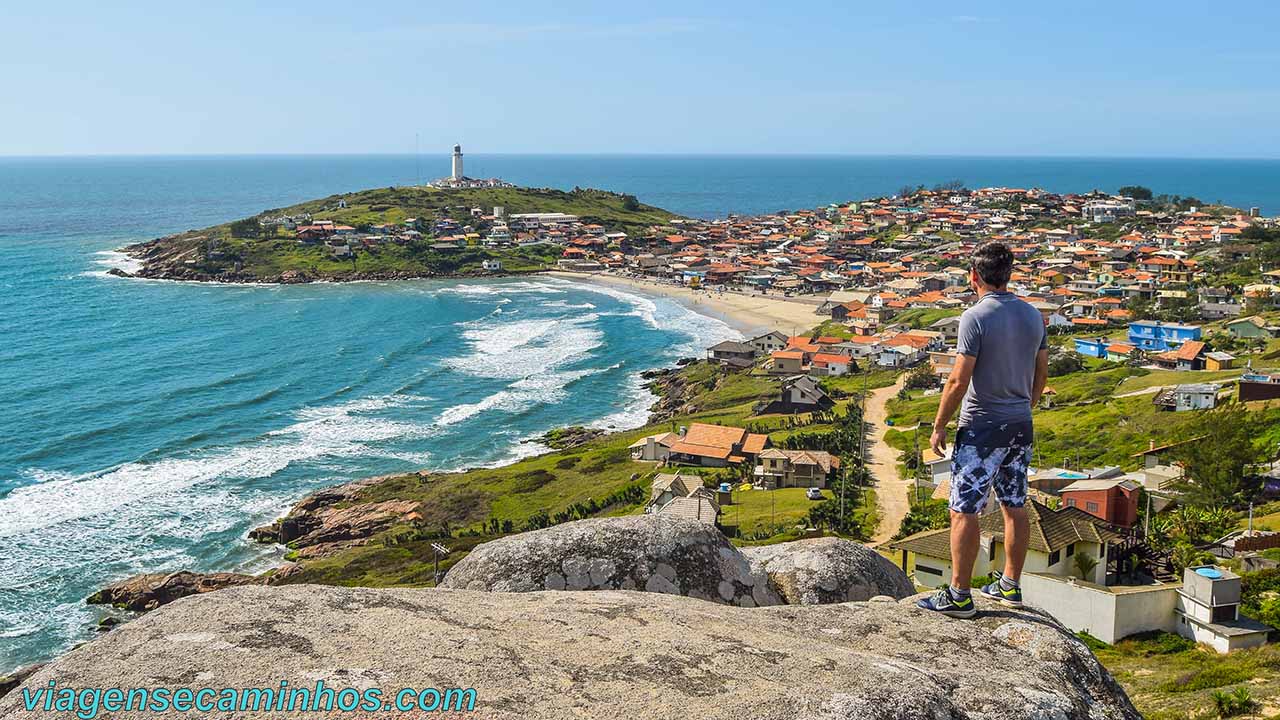
5. A lighthouse, first lit in 1891, continues to shine on the Atlantic.
At Cabo de Santa Marta, in Jaguaruna, a white tower has stood as a landmark facing the sea for over a century.
The Santa Marta Lighthouse was first lit on June 11, 1891. The structure is 29 meters high and was built with a very specific purpose: to guide navigation in a region of the coast historically known for the challenges it presented to navigators.
But the lighthouse also ended up becoming a symbol of the local landscape.
Surrounding it, beaches, dunes, rocky shores, and the ocean form one of the most recognizable landscapes on the southern coast of Santa Catarina. It's one of those places where history and geography appear in the same photograph.
6. There is a time of year when entire communities wait for the same fish.
When temperatures begin to drop, another event takes over different points along the coast of Santa Catarina: the arrival of the mullet.
Artisanal fishing involves more than just those who go out to sea.
Traditionally, there are those who watch the water in search of schools of fish, fishermen prepared to cast or encircle their nets, and people who help with the trawling when the time comes. On some beaches, residents and visitors gather to watch the activity.
The result goes beyond just the fish that washes up on the beach.
The harvest season sustains restaurants, families, and communities that preserve knowledge passed down through generations. Its importance is so great that artisanal mullet fishing is recognized as a cultural heritage of Santa Catarina.
For several weeks, a migratory fish manages to alter the daily routine of part of the coastline.
7. There are waters that naturally reach the surface already heated.
Santa Catarina also has a territory marked by thermal springs.
In Gravatal, in the south of the state, mineral waters emerge naturally at a temperature of around 36 °C and have given rise to a tourist tradition built around thermal baths.
The existence of these springs led the municipality to develop hotels, bathing areas, and other structures connected to the waters.
It's an interesting contrast to other images associated with southern Santa Catarina. On the same trip, it's possible to leave mountainous regions, pass through the coast, and find naturally heated water springing from the subsoil.
8. There are places where turning off the lights reveals a landscape that cities have hidden.
Not all of the region's discoveries are made during the day.
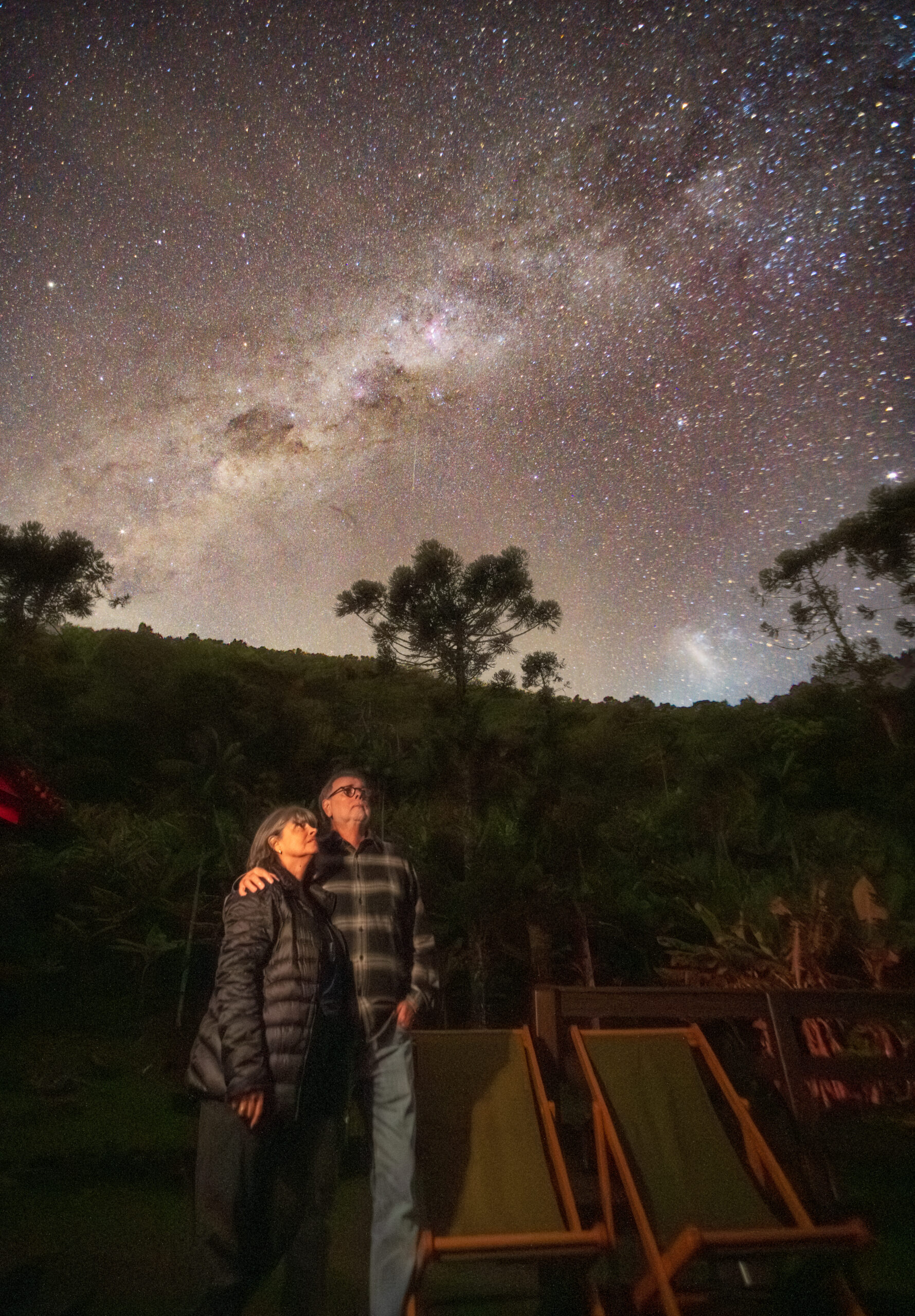
In areas far from large urban centers, the reduced interference from artificial lighting makes it possible to see stars and other elements of the sky that normally disappear under the glare of cities.
The canyon region includes places where this difference becomes especially noticeable. After the cliffs of the Serra Geral disappear into darkness, all you have to do is change the direction of your gaze.
In the Serra do Faxinal, this characteristic also gave rise to the Astronomical Route of the Canyons , held at Morada dos Canyons. The proposal combines contemplation, guidance from astrophotographers, observation through telescopes, and astrophotography.
And you don't need to know astronomy to understand the charm.
Sometimes, the discovery is simply realizing how many stars were hidden by the light that is part of our nights.
9. There is a city at the foot of approximately 11 canyons.
In Praia Grande, the canyons are not just attractions to visit during a trip. They are part of the city's skyline.
Located in the steepest part of the Serra Geral mountain range, Praia Grande is surrounded by the formations of the Aparados da Serra and Serra Geral National Parks , where approximately 11 canyons are found. This geography helps explain why the municipality became known as the Canyon Capital of Santa Catarina.
Itaimbezinho and Malacara are among the best-known names, but they are not the only ones. Índios Coroados and Churriado are also part of this sequence of large rock formations that characterize the region.
From certain vantage points, it's possible to observe different entrances and rock walls forming a veritable frame around the valley. This sensation helps to understand a particular characteristic of Praia Grande: it's not necessary to reach a viewpoint to realize that the canyons are nearby.
They appear during commutes, following rural roads and emerging in the background from different points in the city. In the Serra do Faxinal, this proximity becomes even more evident.
Few destinations manage to summarize their geography so well within their very horizon.
10. There is a coal mine where visitors can go underground.
Criciúma has a deep connection with mining. For decades, coal helped transform the city's economy, landscape, and even identity.
Part of this story can be learned in a rather unconventional way.
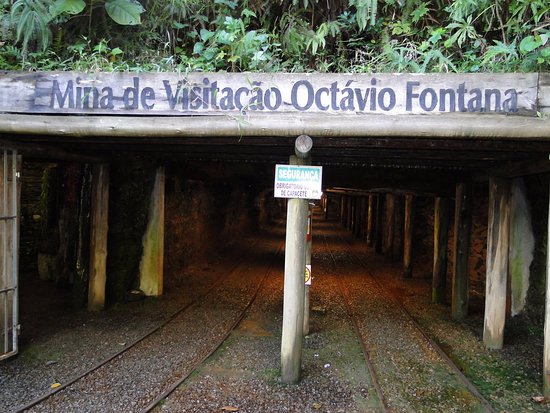
At the Octávio Fontana Mining Museum , visitors enter an old mining area and travel approximately 300 meters inside the mine. The journey can be made on foot or aboard a small locomotive, a replica of a model used in the early 20th century.
Along the route, elements related to coal mining help to illustrate what kind of work marked generations of families in the region.
Currently, it is the only coal mine open to visitors in Latin America.
After exploring Santa Catarina through its beaches, forests, and mountains, ending up a few meters below ground is a rather unexpected way to discover another chapter of the state's south.
Bonus: In southern Santa Catarina, there's a hotel where the stay itself might surprise you.
After canyons, whales, dolphins, hot springs, centuries-old traditions and starry nights, there is another possible discovery in the region.
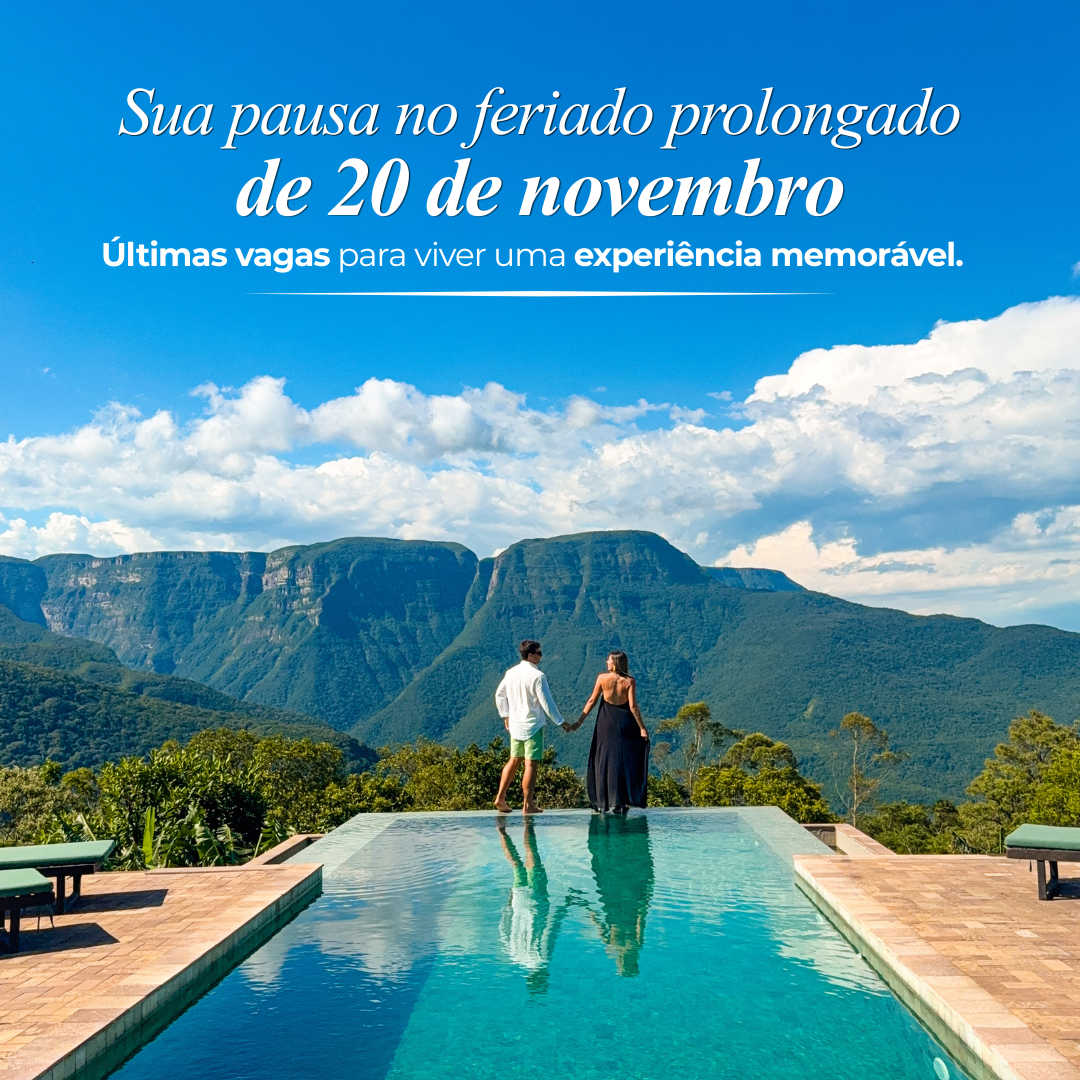
In the Serra do Faxinal, in Praia Grande, Morada dos Canyons occupies an area surrounded by the Serra Geral mountain range, transforming this location into part of the stay itself.
Heated pools offer breathtaking views of the canyons while you're in the water. The Morada SPA features an infinity pool, saunas, massage rooms, a gym, a library, and dedicated wellness spaces. At the Morada Tennis Club, a game takes place surrounded by the natural beauty of the mountains.
Gastronomy occupies other moments of the day, while experiences such as picnics and the Astronomical Route itself add different ways to enjoy the region.
Some of these options are exclusive to hotel guests. Others can also be booked by those visiting Praia Grande who wish to experience Morada without necessarily being a guest.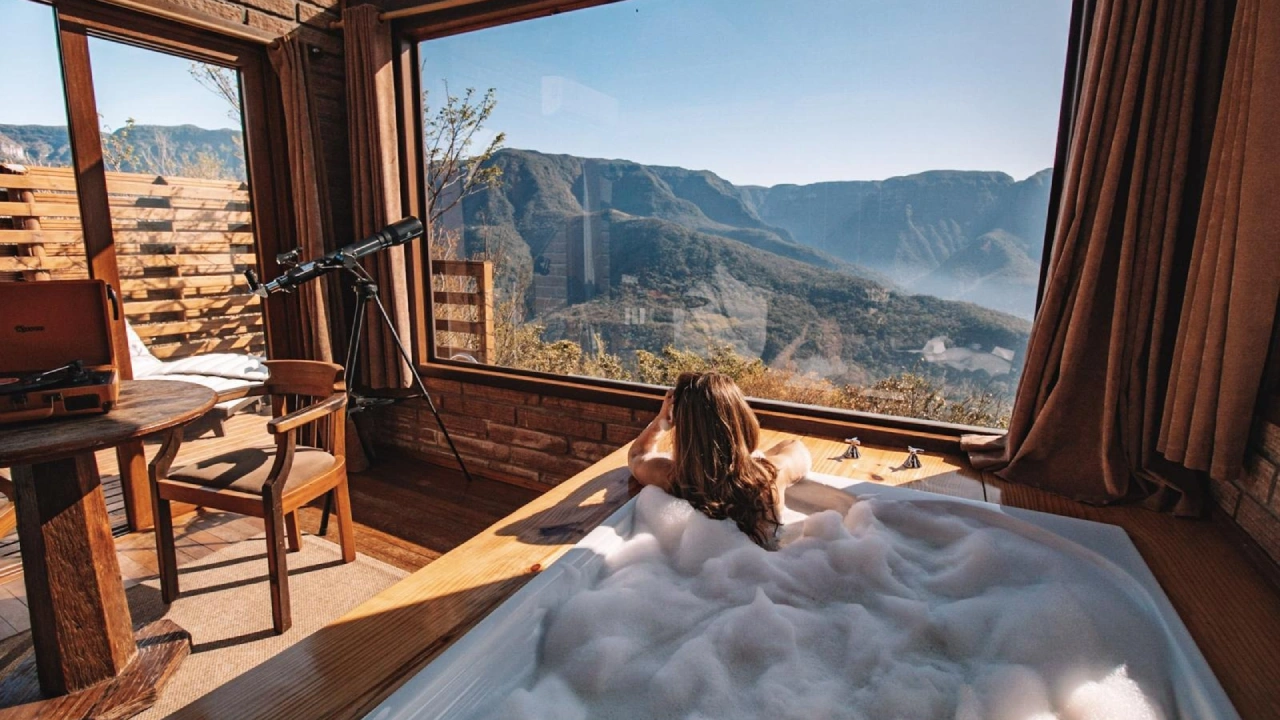
Perhaps this is a good summary of southern Santa Catarina.
It's possible to arrive looking for the canyons and discover, a few days later, that they were just one of the stories the region had to tell.