

By Emanuelle Pasa
Biologist, Mammalogist, Environmental Analyst – Master's student in Ecology and Evolution of Biodiversity, PUCRS
Canyon Carnivore Conservation Project
An essential predator for environmental balance.
The puma is considered an apex predator and plays a fundamental role in the ecosystems where it is present.
By preying on different species, it contributes to the regulation of its prey populations and participates directly in the structure and dynamics of ecological communities.
Its conservation, therefore, goes beyond the protection of a single species. Maintaining populations of large predators is related to the preservation of many other species that share the same ecosystem.
In the Aparados da Serra, one of the important remaining fragments of the Atlantic Forest in southern Brazil, this function becomes even more relevant.
Present, but rarely seen.
Even in regions where the species is present, encountering a puma in the wild is rare.
This happens due to a combination of biological and behavioral characteristics. The puma is solitary, discreet, and seeks to avoid contact with humans. Furthermore, it can detect the presence of people long before being noticed.
Its silent movement and coat in shades of brown, gray, or fawn also favor camouflage in natural environments.
The species is most active during dawn, dusk, and night, although it can also move around during the day. Another important factor is the size of its territory: a single individual can use an area of approximately 50 to 500 km².
Na Serra Santa CatarinaEspecially in preserved areas connected to large natural remnants, this means that the species can move around unnoticed by people. The absence of sightings, therefore, does not necessarily represent the absence of the animal.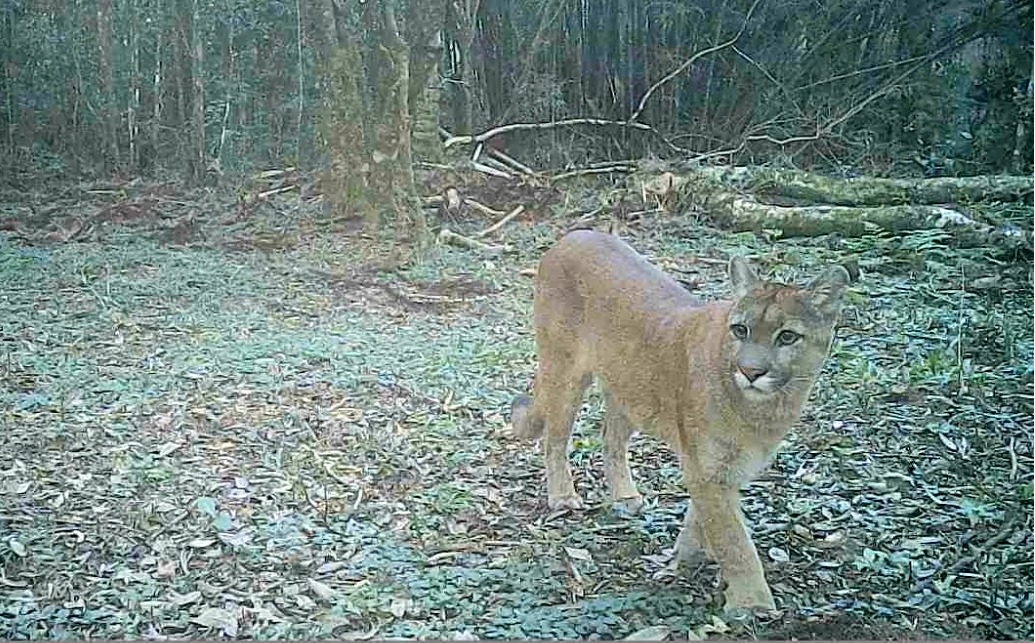 Photo: Biologist Emanuelle Pasa – Carnivore Conservation Project of the Canyons
How can you identify the presence of a puma?
It is not always necessary to see the animal to identify its presence.
Footprints are among the main clues left by pumas during their movements along roads, trails, and places where the ground allows for marking.
Although they may initially be mistaken for the footprints of large dogs, there are important differences. Feline tracks are more rounded and usually do not show claw marks, as their claws are retractable.
Another important resource is camera traps strategically installed on roads or trails used by the animals. Feces can also indicate the presence of the species, although they are found less frequently.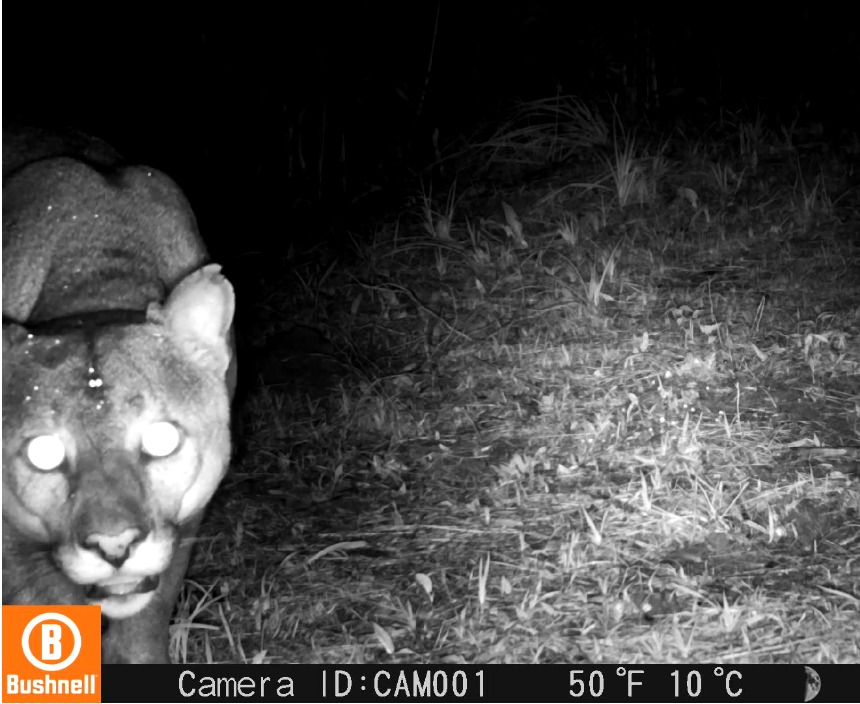
Photo: Biologist Emanuelle Pasa – Carnivore Conservation Project of the Canyons
The environments used by the species
The entire region of Aparados da Serra This is important for the species due to the large area required for its survival and movement.
Some environments, however, play a particularly important role. The forested slopes of the canyons offer areas for rest, reproduction, and raising offspring. Riparian and gallery forests function as natural ecological corridors, allowing movement over long distances.
Mosaics formed by fields and forests, including transition areas between Araucaria forests and high-altitude grasslands, favor the presence of species that are part of the puma's diet.
This diversity of environments also characterizes different points in the territory of UNESCO Global Geopark Southern Canyons Trails, reinforcing the importance of conservation and connectivity between natural areas.
What does the puma eat?
The puma is a carnivore, but it is among the felines considered the most generalist in terms of diet.
In the southern region of Brazil, its main prey includes deer, such as the pampas deer, as well as medium and large rodents, such as agoutis, pacas, and capybaras.
Peccaries, coatis, and armadillos can also be part of their diet. Their diet may also include wild boars, considered an invasive exotic species. In the absence of larger prey, pumas may also consume smaller animals, such as lizards and birds.
This dietary variety reinforces its role in the ecological chain and its influence on different animal populations.
What are the main threats?
Despite its adaptability, the puma faces various threats. Among the main ones are habitat loss and fragmentation, conflicts between humans and wildlife, and being hit by vehicles.
Near rural properties, the reduction of natural prey can cause pumas to eventually attack domestic animals, such as sheep, goats, and calves. This behavior can generate conflicts and result in the pursuit or killing of the felines.
On roads, the risk is related to the large distances traveled by the species. Pumas may cross highways during their journeys, especially at night, increasing the risk of being hit by vehicles.
In tourist regions, the uncontrolled growth of developments can also put pressure on natural habitats. Noise pollution, light disturbance, and improper waste disposal are some of the factors capable of altering movement and hunting patterns and driving away species that serve as food for the puma.
This issue is especially important in destinations linked to nature tourism, such as... Faxinal Mountain Range, the Aparados da Serra (mountain ranges) and other natural areas of the Serra Catarinense (Santa Catarina mountain range)..
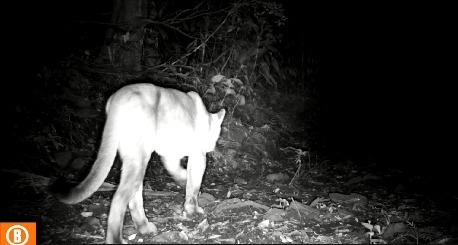
Photo: Biologist Emanuelle Pasa – Carnivore Conservation Project of the Canyons
What should you do if you encounter a puma?
Although encounters are rare, knowing the appropriate behavior is important for residents, visitors, and professionals who frequent natural areas.
If a puma enters backyards, garages, sheds, or residences, do not attempt to corner or feed it. The advice is to remain calm, avoid sudden movements and crowds, move away, and stay safe. The competent environmental agencies or the Environmental Police should be contacted. In the southern region of Santa Catarina... Environmental Military Police (based in Maracajá/SC) can be contacted by phone (48) 3431-7485 ou (48) 3529-0187.
When encountering an animal on a highway, the advice is to reduce your speed and allow it to cross and move away.
During hikes and other tourist activities, some preventive measures are also recommended, such as learning about the local wildlife beforehand, preferably hiking in groups, and keeping children and pets close and under supervision.
In a direct encounter:
- Don't run. The movement of fleeing can activate the animal's hunting instinct.
- Remain still and observe the animal without staring directly at it.
- Keep children and pets away.
- Try to appear taller by raising your arms or opening your jacket.
- Make noise, shout, whistle, or use a whistle.
- Back away slowly and give the animal space to move away as well.
- If there are puppies or kittens, never stand between them and their mother.
- If attacked, use available objects to defend yourself.
Pumas rarely attack humans and generally try to avoid contact. Respecting their space and understanding their behavior are fundamental steps towards safe coexistence.
Did you find footprints or other traces?
Track records can also contribute to the knowledge and conservation of the species.
Whenever possible, it is recommended to photograph footprints or other traces and record the location, using landmarks, distances on trails, or geographic coordinates.
If the registration is carried out on private property, the owners must be informed. In municipal, state, or federal parks, the information can be passed on to the managers or employees responsible for the area.
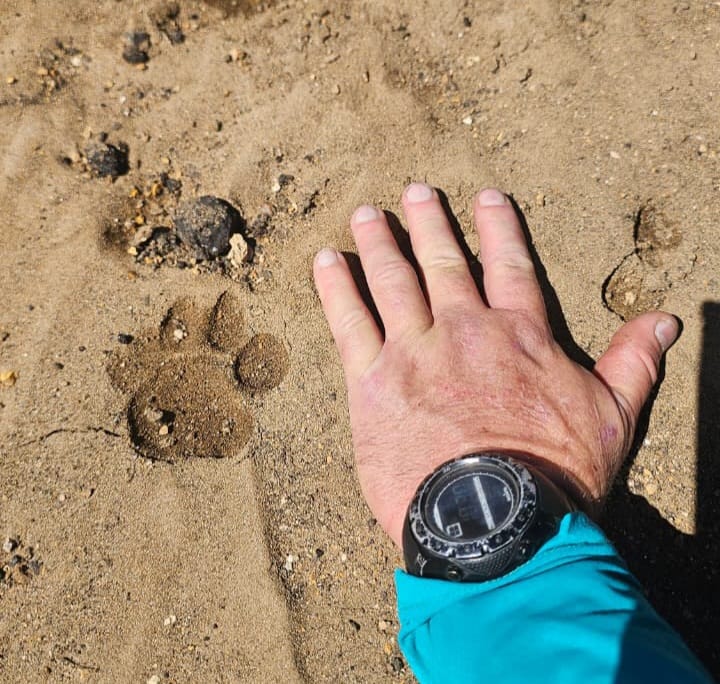
Photo: Tatiana Bressel – Puma footprint during an expedition of the Amphibian Conservation Project of the Aparados.
It is also important to remember that wild animals are protected by Brazilian law. The material highlights Law No. 9.605/1998 , which prohibits practices such as killing, chasing, hunting, and capturing specimens of wild fauna.
Nature tourism as an ally of conservation.
The presence of the puma in the Aparados da Serra region highlights the direct relationship between nature tourism and environmental conservation.
Responsible visitation to parks and natural areas can contribute to the appreciation and protection of biodiversity, provided it is carried out in a structured and planned manner.
Nature tourism can generate environmental, economic, and social benefits, promoting the conservation of fauna and flora, local development, income generation, cultural appreciation, and environmental education.
This relationship gains relevance in a territory like UNESCO Global Geopark Southern Canyons Trails, which brings together municipalities, communities, businesses and natural areas connected to the identity of the canyons of southern Brazil.
Responsible tourism, however, should not encourage approaching, chasing, or unnecessarily exposing wild animals. Getting to know wildlife also means understanding its limits and respecting its natural behavior.
Na Faxinal Mountains and the Aparados da SerraThe presence of the puma reinforces the environmental importance of a region marked by the connection between canyons, fields, and forests.
More than just the possibility of a rare sighting, knowing that a large predator like the puma roams the region helps to understand the biodiversity that exists in this part of southern Santa Catarina and the shared responsibility of residents, visitors, and tourism businesses in its conservation.
Source: Azevêdo, FC; Saranholi, BH; Dias, DM; Eizirik, E.; Abra, FD; Lemos, FG; Oliveira, TG. 2023. Puma concolor . Biodiversity Extinction Risk Assessment System – SALVE. Available at: https://salve.icmbio.gov.br . Digital Object Identifier (DOI): https://doi.org/10.37002/salve.ficha.14019.2.